
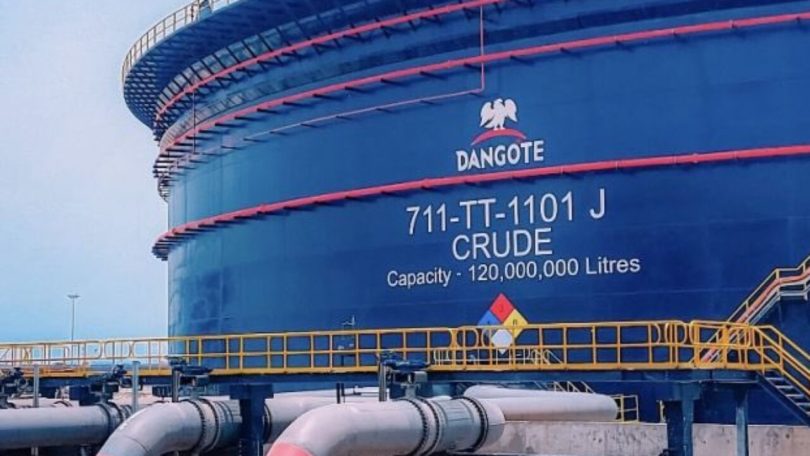

In the second quarter of 2026, Nigerian producers offered 68.1 million barrels of crude to the country’s domestic refiners. 98 percent of it went to one company. Not 98 percent of what that company needed, 98 percent of everything that was on the table for the entire sector.
Everyone else was left fighting over the scraps, and calling it two percent is generous, because that same quarter, Nigeria’s modular refiners didn’t lift a single barrel under the government’s own domestic supply scheme. Not one. So the question worth asking isn’t really rhetorical anymore: after two decades of promises to diversify Nigeria’s refining base, is there still a policy here, or has it quietly narrowed to a set of arrangements for keeping one refinery fed?
It wasn’t supposed to work out this way. When Dangote’s refinery was still under construction, the pitch to Nigerians was that it would be one big player among many, a flagship, not a monopoly, arriving alongside a wave of modular refineries and a revived set of state-owned plants that would together end the country’s decades-long habit of importing the same fuel it produces the crude for. That vision assumed competition. What Nigeria has instead is one refinery large enough to matter and a supporting cast that either can’t get crude on workable terms or has been switched off altogether.
That gap between the plan and the outcome is what makes the current numbers worth more than a passing headline. A single company controlling the overwhelming share of domestic refining isn’t automatically a scandal; scale has to come from somewhere, but it does change who the government is negotiating with when fuel prices spike, who absorbs the shock when crude supply tightens, and how much leverage is left in Abuja’s hands versus one boardroom in Lagos. That’s the tension the rest of this piece tries to sit inside.
The Numbers Tell a One-Refinery Story
On paper, the Domestic Crude Supply Obligation, the rule requiring producers to offer crude to local refiners before they export it, is meant to cover the whole sector. In practice, the Nigerian Upstream Petroleum Regulatory Commission’s own data tells a narrower story. Producers hit 97.4 percent compliance for April to June, supplying 53.7 million barrels against a 55.1 million barrel allocation. That headline figure sounds like a policy working. It stops sounding that way once you ask who actually got the crude: Dangote Petroleum Refinery needed 63 million barrels for the quarter and was offered 68.1 million, while everyone else combined barely registered.
Dig a bit further, and the picture gets messier, not cleaner. The Crude Oil Refinery Owners Association of Nigeria says its modular members turned down the crude they were offered because the pricing, benchmarked against Brent and WTI, doesn’t reflect what it actually costs a small refinery to move crude within Nigeria. A Daily Trust review of NMDPRA records found that between December 2025 and June 2026, only three modular plants were even running: Waltersmith, Edo Refinery and Aradel, producing a combined average of just 562,000 litres of diesel per day. OPAC and Duport sat idle the whole stretch.
Then there’s the state-owned side, which is arguably in worse shape. Port Harcourt, Warri and Kaduna are all shut, after NNPC’s own leadership admitted the plants were running at “monumental losses” with utilisation stuck around 50 to 55 percent, a call the corporation’s chief executive has more or less credited Dangote’s refinery for making politically possible, since shutting them down no longer meant Nigerians would simply run out of fuel. NNPC has since signed a memorandum with two Chinese firms to explore the revival of Port Harcourt and Warri, but no restart date has been announced, and Nigerians have heard this particular promise before.
What complicates the “policy built for one refinery” read is that Dangote doesn’t sound like a company that feels favoured. It’s publicly pushed back on the 98 percent number, saying it actually rejected 15.5 million barrels of what it was offered that quarter because crude routed through international oil companies came loaded with premiums that made it commercially pointless to buy. The refinery has had to cover the gap at dollar prices instead, spending around $4.48 billion on 40.4 million barrels imported in May and June alone. That currency mismatch became so painful that, in July, Dangote suspended naira pricing altogether and started selling petrol, diesel, and jet fuel in dollars until the federal government stepped in with a dollar-for-naira swap to restore naira pricing.
Saying a policy is “written for one refinery” implies someone sat down and wrote it that way on purpose. What the numbers actually show looks more like a market with exactly one large-scale option left standing, and a government improvising its way from one crisis to the next around that fact, rather than a deliberate plan to hand one company the sector.
There’s a decent case that this tilt is structural rather than engineered. Nigeria’s crude output swings wildly, and when supply tightens, a 650,000-barrel refinery with real negotiating leverage is always going to outmuscle modular plants processing a few thousand barrels a day, whatever the rulebook says. That’s not what the Petroleum Industry Act was supposed to produce. The 2021 law was written around multiple refining centres, open access to crude, and transparent pricing, not a single national champion. One commentary tracking the sector’s decline put it plainly: Nigeria “must not answer state failure with private dominance.”
But there’s also a case that the state has started treating Dangote’s refinery less like one licence-holder among many and more like infrastructure it can’t afford to let fail, which lands in roughly the same place by a different road. The July dollar swap wasn’t extended to modular refiners dealing with the exact same currency squeeze. And the regulatory pressure has run in a similar direction: Aliko Dangote himself has accused the Nigerian Midstream and Downstream Petroleum Regulatory Authority of undermining local refining by continuing to approve import licences, pointing to roughly 7.5 billion litres of petrol import permits cleared for the first quarter of 2026 despite the local capacity sitting right there. That’s a complaint coming from inside the tent, not outside it, a sign that even the refinery the numbers seem to favour doesn’t think the policy environment is settled in its favour yet, and is actively pushing to tilt it further.
Regulators insist a fairer system is still on the table. CORAN says talks are underway on reforms that would let refiners lift crude directly from production sites at a discount reflecting freight and handling costs they don’t actually pay, a proposal explicitly framed as helping “Dangote, other refiners”, plural. Whether that plural survives contact with Nigeria’s crude production reality is the thing worth watching over the next few quarters, not the last one.
So, is Nigeria’s oil policy written for one refinery? The rulebook still says no. The outcomes increasingly say otherwise. And a country trying to rebuild its energy security has to reckon with the fact that those two things drifting apart is, itself, a policy failure worth naming.
Victor Ejechi is a 2026 Free Trade Fellow at the Ominira Initiative.

Leave a Comment