
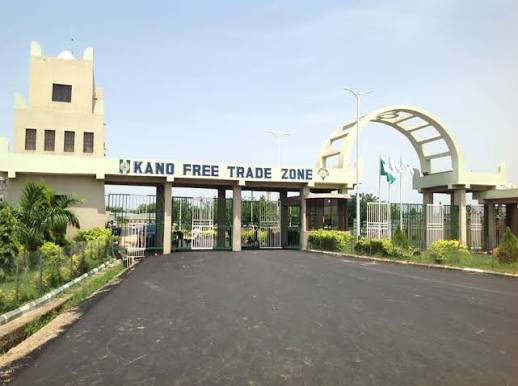

Nigeria’s Free Trade Zones (FTZs) have become one of the country’s favourite economic success stories. The Nigeria Export Processing Zones Authority (NEPZA) reports that the scheme has contributed about $33 billion, attracted over 900 businesses and created jobs for over 100,000 people. By any standard, these are impressive numbers. Yet, beneath this celebration lies a question every Nigerian investor should ask: why should companies enjoying special tax favours be permitted to borrow from ordinary Nigerians who are bearing the tax burden that keeps the country running?
This question has become pertinent following the proposed framework by the Securities and Exchange Commission (SEC), which will allow Free Trade Zone Entities (FTZEs) to sell securities to the Nigerian public. According to the proposal, qualifying FTZEs will need to have at least ₦7.5 billion in paid-up capital, a valid licence from relevant institutions like NEPZA, a 3-year history of operations and meet certain criteria for regulations. At first glance, the framework appears to strengthen the Nigerian capital market and increase investment opportunities. But there is an underlying issue of fairness.
Free Trade Zones were designed to encourage foreign investment, boost exports and industrialisation. Around the world, such zones often offer incentives including tax holidays, duty-free imports, unrestricted profit repatriation and reduced regulatory burdens. Nigeria adopted the model in the early 1990s to compete for international investment capital. There’s nothing wrong with providing specific incentives to draw investors, and indeed, a number of successful economies have relied on special economic zones for growth. The challenge arises when incentives turn into privileges that aren’t tied to accountability.
Every African entrepreneur outside a free zone must pay company income tax, value-added tax, withholding tax, levies, permits and a variety of informal charges. Every day, the average Nigerian worker pays taxes directly and indirectly. But many FTZ operators are exempted from some of these requirements, but enjoy infrastructure, public security and public institutions financed by taxpayers.
In plain language, the mechanic in Warri, the teacher in Ughelli, the civil servant in Abuja and the trader in Onitsha may soon be invited to invest their money in enterprises that contribute far less to public revenues than they do. That should concern anyone who cares about economic equity.
The concept of “shared risk and shared reward” is the principle of capital markets. Investors invest in companies because they expect to receive returns on their investment through the development and earnings of the company. However, the proposed framework creates a rather unusual situation. The benefits for FTZ companies are compounded by huge tax incentives, and the risks are increasingly borne by Nigerian retail investors.
Shareholders can receive dividends if the FTZE is successful. When it doesn’t, regular investors will suffer losses. Yet, during the companies’ lifespan, it may have contributed far less to the national treasury than firms outside the zones. This raises an uncomfortable question: are we witnessing the privatisation of privilege and the socialisation of risk?
The SEC should be commended for trying to safeguard investors by imposing requirements like the ₦7.5 billion capital requirement and a required operational history. These precautions are good. The issue is whether those entities that receive extraordinary fiscal benefits should have the right to siphon off the savings of citizens who are funding the state at the expense of which they receive those benefits.
Economic freedom is best enjoyed if it is accompanied by reciprocity. When society gives businesses special privileges, there should be a return for that. Advocates argue that FTZ already provides this via jobs, exports and foreign investment. That’s a fair point. The African Development Bank and the World Bank have both acknowledged the potential of S.E.Zs in stimulating industrial development and attracting investments which would otherwise flow to other destinations.
International experience also shows that tax incentives often don’t meet their benefits. Numerous studies have shown that high tax allowances can lead to a decrease in government revenues without having any appreciable effect on investment choices. Tax holidays are often not the only thing investors care about; they also care about infrastructure quality, policy stability, reliable power and access to markets. Nigeria’s experience should encourage caution because, despite decades of incentives, the country still struggles with industrial competitiveness, power constraints, and insufficient export diversification.
Policymakers should ask a simple question: What duties should go with the privilege of direct access to public capital? Should FTZ companies be held to higher transparency requirements than other companies to obtain public investment? Should they be required to pay their own way into dedicated infrastructure funds? Would they release comprehensive reports on jobs created, taxes waived and economic value created? Currently, the proposed framework looks more like one for market access than a public accountability one.
Supporters of the SEC proposal will argue that including FTZ companies in the capital market will help increase investment opportunities, boost market liquidity and stimulate economic growth. While these are good, capital market development isn’t a way for tax havens to get access to the pocketbooks of those who have not reaped the rewards of such a privilege.
It is imperative for the capital market to become a link between investment and productive enterprise in Nigeria. It should not be a channel for the extraction of resources by privileged groups with no reciprocal responsibilities. It is ironic that while governments are looking for tax revenues, citizens are struggling with rising living costs and businesses outside free zones, policymakers are considering opening the nation’s investment pool to companies that were specifically created to operate under different fiscal rules.
This could be a cost-effective solution. It could even be legal! But fairness requires a more robust discussion. The SEC’s proposal is not necessarily wrong; it is incomplete. If entities are to raise capital from the Nigerian public, the framework should be strengthened by introducing additional disclosure requirements, increased transparency obligations, and clear requirements for demonstrating public value. Investors should not only understand what profits a company generates, but what it contributes to the economy as a whole.
Nigeria should sustain its efforts to encourage investment, entrepreneurship and economic freedom. Free Trade Zones can play a part in that mission. But economic freedom is not to be confused with economic privilege. It is not a question of whether Free Trade Zone enterprises are entitled to capital. The pertinent issue is whether Nigerian taxpayers deserve a fairer deal before being asked to pay for them.
Rita Enemuru is a 2026 Free Trade Fellow at Ominira Initiative. She reports and fact-checks for Stonix News.

Leave a Comment